
Wondering how to treat bot fly larva in horses?
Are bots dangerous?
Can I prevent bots and bot flies?
Which wormer should I use, should I even use a wormer?
First a quick recap on "bots"
If you’ve seen a bot larva in your horse poo then you might be wondering which “wormer” to use. Firstly, although we talk about “worming” for bots, they are not a worm but actually a flying insects.
The common bot- Gasterophilus intestinalis- is the species most often encountered in the UK. The adult lays pale yellow eggs on the horses hair, most usually the shoulders and forelegs. These eggs are then taken into the horse’s mouth as it rubs itself. Within the mouth the conditions prompt the eggs to hatch a pinhead-sized larvae that burrows into the gums, or beneath the tongue.
The larvae stay in the mouth for three–four weeks before using the gastrointestinal tract to reach the gut where they burrow into the wall. The larval stages of the three species- G.intestinalis, G. nasalis and G. haemorrhoidalis all have different attachment positions with the GI tract
The larvae are thought to remain attached in the gut for some 10-12 months, before detaching in spring/early summer and being passed out in the host faeces. The pupal stage, the stage after larva, are particularly sensitive to environmental conditions- cold and wet- and do not survive well in those environments. After around 5 weeks of pupation, the adult fly emerges- the adult only survives for some 14 days!
Are bots dangerous to a horses health?
If you see a bot fly larva in a horse’s poo it can be quite disturbing but only in rare cases will bots cause disease or discomfort. That said, any internal gut parasite has the potential to be detrimental to a horse’s health.
Often horses are completely asymptomatic when a bot infestation is present. When symptoms are present they can be very wide-ranging:
- Inflammation of the mouth and gums, mouth ulcers and secondary infections
- Non-specific changes to the bowel- Diarrhoea, Constipation
- General loss of condition, listlessness
- Mild gastritis caused by damaging the stomach lining; this can lead to colic
- Ulceration and abscesses in the gut can also trigger colic episodes.
- Peritonitis – where the stomach lining is breached as digestive juices aggravate the ulceration
- Stomach-Intestinal blockage; when an infection is severe
What can I use to treat them ?
Depending on the stage of infection you have noted then there are a number of options available.
Flies– Insect repellants can certainly assist here, although they will not be 100% effective in keeping the egg-laying adult flies away from your horses. These repellants are not authorised veterinary medicines and are freely available. Our recommendation is available from Amazon via this link Carr & Day & Martin High Strength Fly Repellant
Eggs – If you are finding eggs on the coat then these can be physically removed during your grooming. We recommend the use of a good bot fly knife to properly completed this. The Shires bot knife is available from Amazon as is good value for money.
Larva– Ingested larval stages are not considered effectively treatable until they reach the horse’s gut. If you’ve seen a botfly larva in your horse’s poo then the general recommendation is to worm with a chemical wormer.
So which wormer should I use??
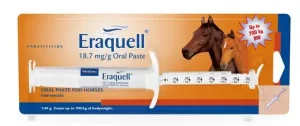
Due to their lifecycle, a single treatment is recommended, and broad-spectrum anthelmintics like ivermectin are effective. So a product such as Vectin ® Oral Paste from MSD or Eraquell Oral Paste from Virbac would be our choice. For an alternative then Nexmectin Oral Paste from Audevard is a sound choice.
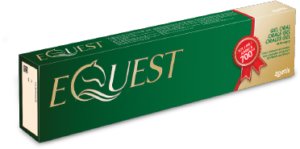
If treating in winter, after some frosts which kill adult flies and any larva on the pasture, then it can be beneficial to combine bot treatment with a winter worming dose against encysted redworm by using a moxidectin-based wormer. In this case, Equest Oral Gel (Green box!) is indicated to treat both encysted redworm and bot infections.

Contact Us
We stock and supply the full range of equine worming products.
We offer free SQP/RAMA advice
Give us a Call
Landline: 01353 440 409
Mobile: 07923 577 216